SCOTLAND - NOT FOR SALE
Freeport – Inverness and Cromarty – 2
Inverness & Cromarty Firth Green Freeport (ICFGF)
Website: https://greenfreeport.scot/
Contains : News, newsletter, guest blogs and resources
Contact: info@greenfreeport.scot
Board meetings every two months
Agendas and Minutes – published on website – last meeting published 13th March, 2026
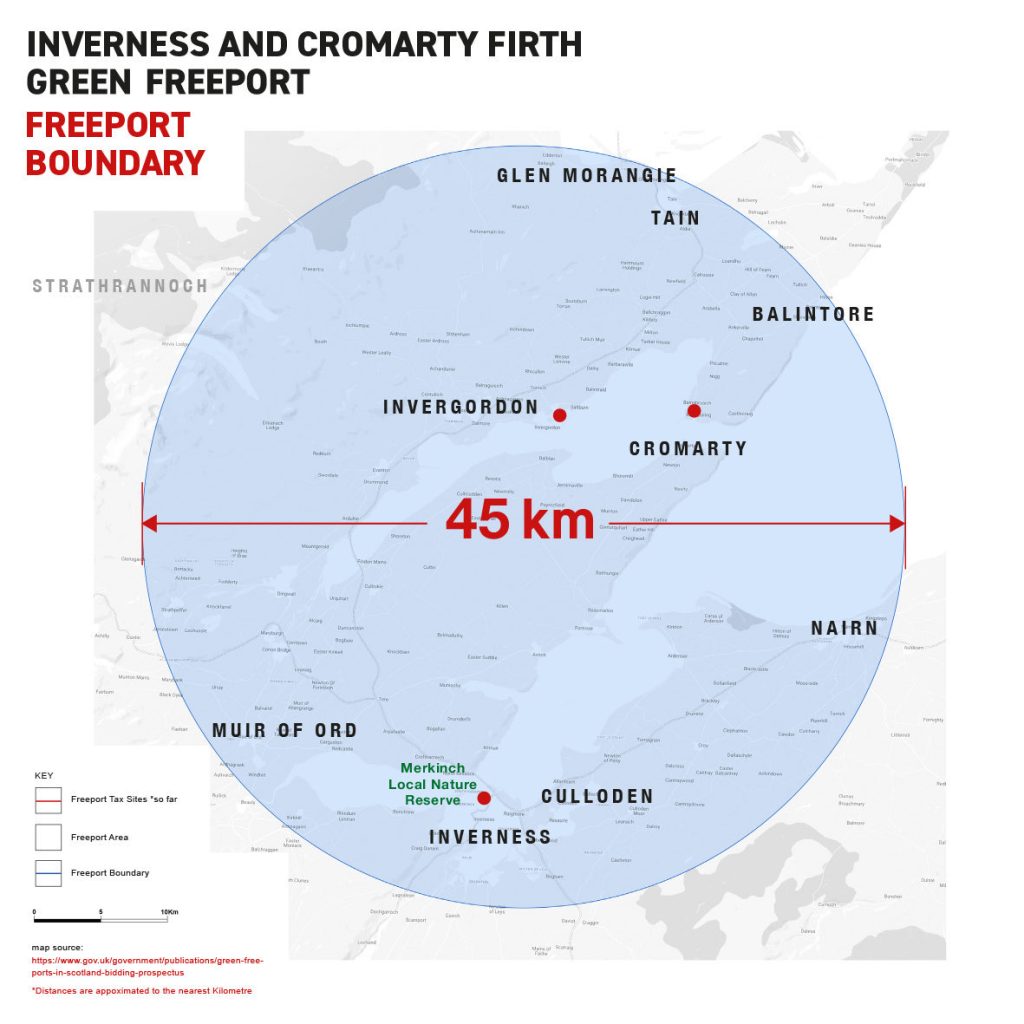
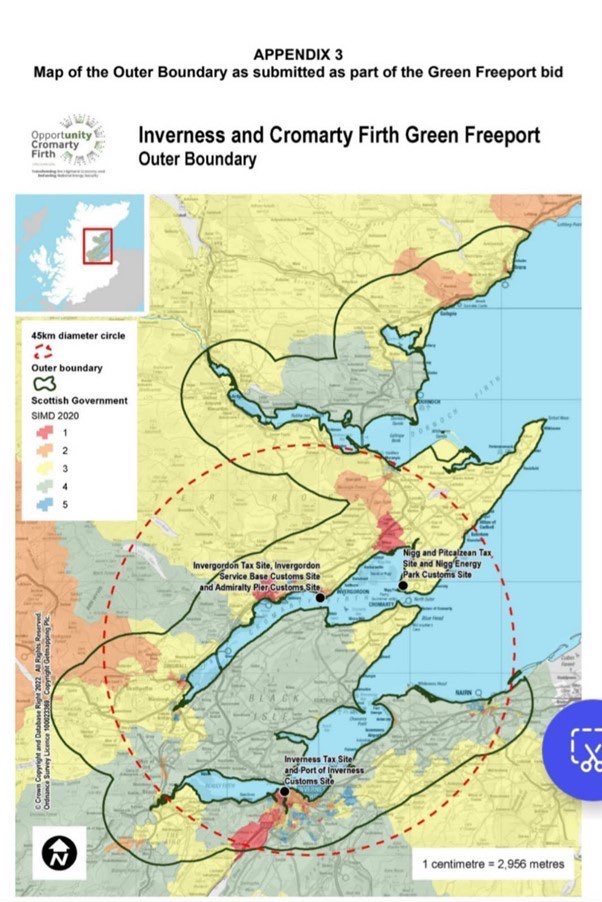
Full business case
ICFGF has not fully published their Business case. It was presented to the Scottish and UK goverments and treated as confidential because parts were commercially sensitive.
What there is instead is publically is a highland council update plus the Full Business Case summary and supporting appendices.
The scale of the proposition is substantial. The headline claims presented to Highland council include:
- around 520 hectares of tax-site land;
- more than £6.5 billion of investment over 25 years;
- 18,300 UK jobs, of which approximately 11,300 are forecast to be in the Highlands;
- approximately £547 million of retained Non-Domestic Rates (NDR) over 25 years;
- £25 million of government seed capital;
- more than £60 million of additional public funding and almost £175 million of private funding associated with the seed-capital projects, producing around £260 million total expenditure on those projects;
- a focus on offshore wind manufacturing, hydrogen, ports/maritime industries, advanced manufacturing and innovation,
Those figures are projections rather than achievements. That is perhaps the single most important distinction for our purposes. The Council report itself describes £547m NDR (non-domestic ratees) as a forecast and recognises risks concerning both the amount and timing of NDR receipts.
Retained Non-Domestic Rates are arguably more significant for long-term scrutiny than the £25m seed capital.
Highland council
Highland Council’s role is much stronger than merely being a partner
Highland Council is the Accountable Body. It is responsible to government for expenditure and management of centrally funded public money, including capacity funding, seed capital and retained NDR.
The Council’s Section 95 Officer has significant responsibilities. The report says the S95 Officer must sign off payments from the net retained NDR fund and that the Council has a right of veto.
The governance structure also gives Highland Council involvement through five routes: the Section 95 Officer, Member Monitoring Group/Economy & Infrastructure Committee, Investment Sub-Group, proposed Memorandum of Understanding, and membership of the ICFGF Board.
That makes Highland Council an important source for our future evidence gathering. It should be much harder for significant public-money decisions to disappear completely behind the private company structure.
Interesting governance tension
The ICFGF Board contains representatives of major ports and tax-site landowners alongside public-sector and academic representatives. The June 2024 composition included representatives from Highland Council, Port of Cromarty Firth, Global Energy Group, Port of Inverness, University of the Highlands & Islands, HIE, Port of Ardersier, the Chief Executive and an independent chair.
That is not inherently problematic – the Freeport is deliberrately a public-private partnership. but it creates a governance question:
How are decisions involving public money handled when organisations represented in the governance structure may themselves own tax-site land, operate facilities or benefit from investment?
The safeguards around conflicts of interest, recusals, investment appraisal and publication of decisions therefore matter enormously
One part of the model I find quite interesting is the Tax Site Delivery Agreements (TSDAs).
Tax-site landowners have committed to develop their land for genuine additional economic activity. The agreements are binding on tenants and future owners and include commitments relating to Fair Work and Net Zero. The report says benefits of Green Freeport status can potentially be withdrawn where landowners fail to comply.
That gives us another strong future test:
Are those obligations actually enforced?
If the agreements themselves are not publicly available, it would also be worth establishing exactly what information about compliance will be published.
Other areas of interest
Skills – the FBC itself identifies insufficient skilled labour seen as a major risk.
Infrastructure – Grid capacity, A9/A96 dualling, housing, schools and other council services arising from employment and population growth.
Who ultimately pays for the wider infrastructure required to make the Freeport’s projected growth possible?
Monitoring and evaluation
The document states that the Government Monitoring and Evaluation Framework will assess:
- KPIs and data tracking;
- whether outcomes are genuinely additional;
- whether policy objectives have actually been achieved; and
- how and why the intervention produced its effects
What was promised? What was measured What actually happened?
The full business case (FBC) forecasts benefits and commitments made when the Freeport was approved. will be interesting to measure these forcasts against actual in the next 25 years.
We, the public, only see the executive summary because of confidentiality which limits scrutiny of assumptions behind some very large projected benefits.