Freeports and SEZ Special Economic Zones and Energy
SCOTLAND - NOT FOR SALE
Energy – BESS
Battery Energy
Storage System
What is BESS ?
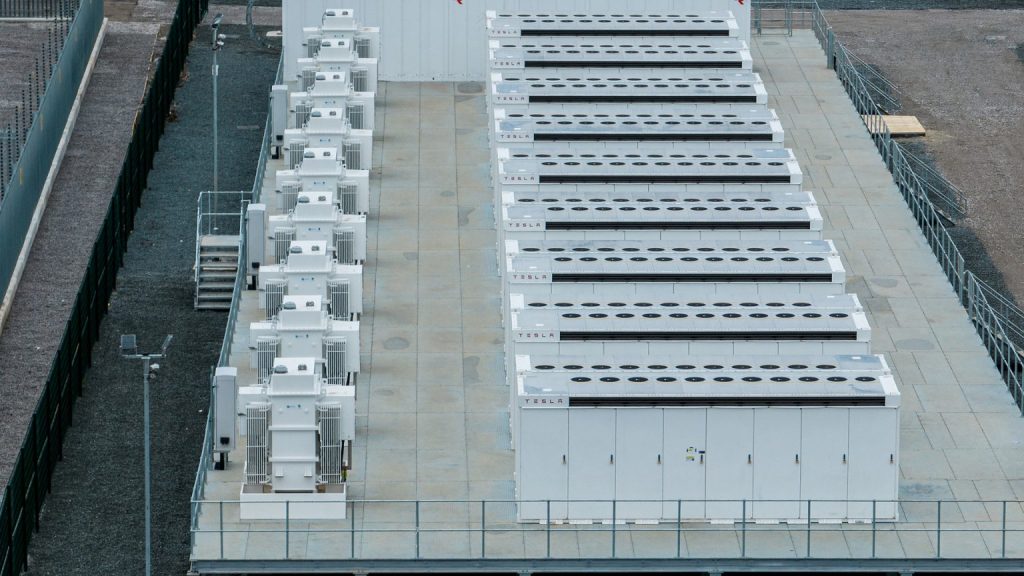
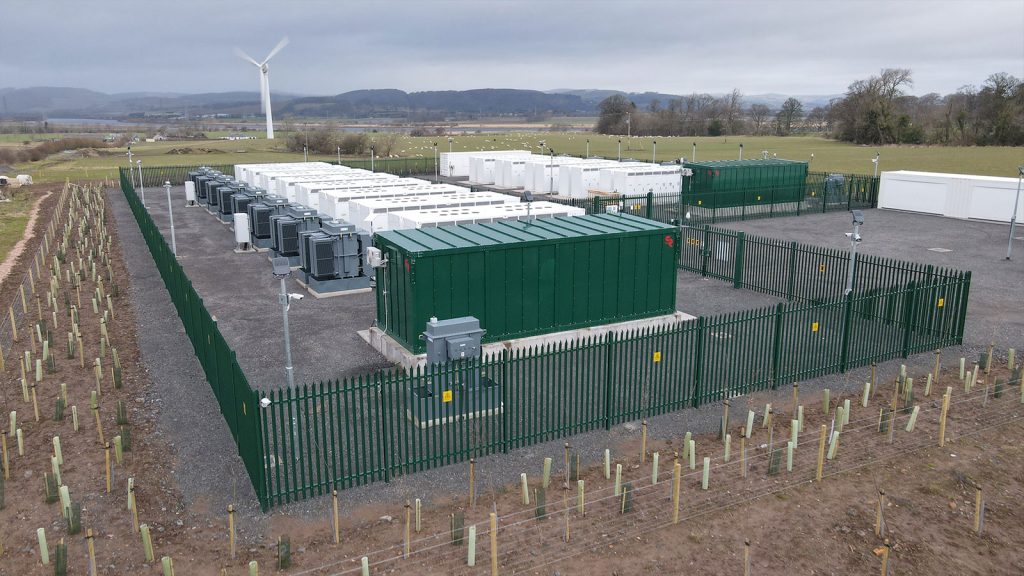
A battery energy storage system (BESS), battery storage power station, battery energy grid storage (BEGS) or battery grid storage is a type of energy storage technology that uses a group of batteries in the grid to store electrical energy. Battery storage is the fastest responding dispatchable source of power on electric grids, and it is used to stabilise those grids, as battery storage can transition from standby to full power in under a second to deal with grid contingencies.[1]
Stores excess renewable energy for later use. Helps stabilise the grid but raises concerns about cost, sustainability, and planning.
Battery storage is a technology that captures and stores excess electricity—often from renewable sources like wind and solar – so it can be used when demand is high or when generation is low.
Large-scale battery projects are being developed across Scotland and the UK to stabilise the grid, reduce reliance on fossil fuels, and support the transition to renewable energy.
However, questions remain about their environmental impact, long-term sustainability, and how these projects are planned and funded.
What safeguards? What Accountability?
Why it matters for Scotland
Supports renewable energy integration
Helps prevents blackouts
Reduces fossil fuel an nuclear back up needs
Can export stored energy to England and Europe
Hazards
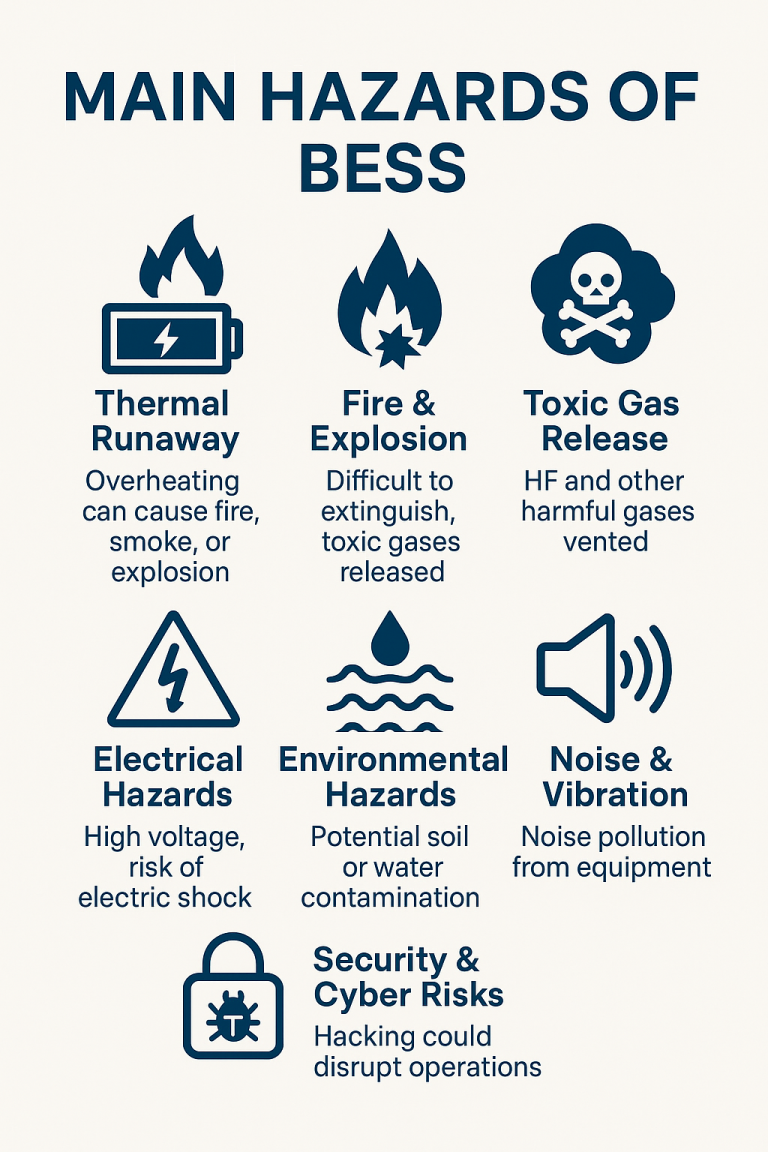
Thermal Runaway
If a lithium-ion cell overheats, it can trigger a chain reaction → fire, smoke, or explosion.
Causes: mechanical damage, overcharging, poor cooling, or manufacturing defects.
Fire & Explosion
Lithium-ion battery fires are difficult to extinguish (can reignite hours later).
Gases released (hydrogen, carbon monoxide, HF acid) are toxic and flammable.
Toxic Gas Release
During overheating or fire, batteries can vent gases:
Hydrogen fluoride (HF) → highly toxic, corrosive to lungs/skin.
Other organic vapours → harmful if inhaled
Electrical Hazards
High voltage (often hundreds of kV for utility-scale systems).
Risks of electric shock, arc flash, or electrocution for workers.
Environmental Hazards
Risk of electrolyte leaks contaminating soil or water.
Disposal/recycling challenges → heavy metals, solvents.
Noise & Vibration
Cooling fans, HVAC, inverters, and transformers can cause noise pollution in local communities.
Security & Cyber Risks
Remote monitoring/control systems could be hacked → risk of grid instability or shutdown.
Safety measures commonly used
Fire suppression systems (inert gas, water mist, aerosol).
Thermal management (cooling systems to prevent overheating).
Gas detection (for HF and other toxic gases).
Physical separation of battery containers to stop fire spread.