Forth Freeport – half of Fife, 70% of Edinburgh, Falkirk and Grangemouth. Three councils involved. Links below.
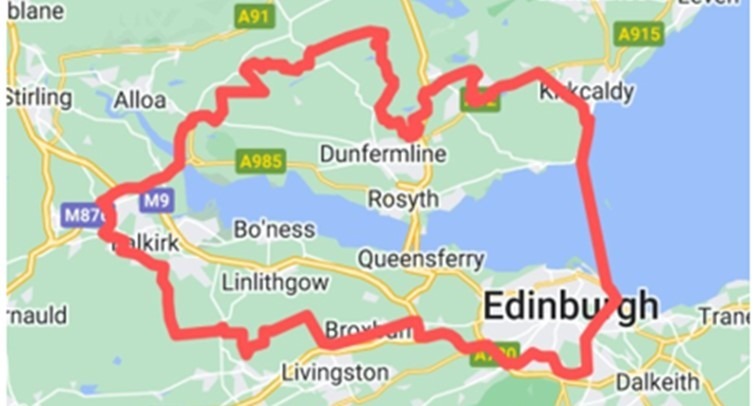
The Forth Green Freeport forms one of Scotland’s two designated Green Freeports, established jointly by the Scottish Government and UK Government following a competitive national bidding process.
Unlike traditional statutory public bodies, a Green Freeport is established through:
agreements between governments;
approved Business Cases;
Memoranda of Understanding;
contractual governance arrangements;
local authority accountability.
The Green Freeport therefore represents a partnership model combining public and private sector organisations operating under agreed governance arrangements rather than under a single Act of Parliament. The governance model is intended to satisfy government requirements for effective structure, effective personnel, effective functions, and clear accountability for public funds.
Governance Principles
The permanent governance framework is intended to provide:
strategic leadership
partnership working
financial accountability
transparency
risk management
responsible stewardship of public funding
long-term regional economic development
support for Net Zero objectives
The Forth Green Freeport states that its governance arrangements are founded on transparency, accountability, partnership working, structured decision-making, assurance, risk management and financial control.
There is a dedicated website for the Forth Green Freeport
There is a Forth Green Freeport full business case as published in April this year (2026), which runs to 321 pages and is full of detailed information, including the strategic case, Interventions and levers, Outputs and outcomes, the economic, financial, commercial, and management case, which also includes monitoring and evaluation starting on page 313.
It is encouraging to read that FGF understands the importance of robust monitoring and evaluation to ensure accountability. transparency and visibility for this new venture. The case also confirms Falkirk council will undertake regular reporting processes to provide information to the governments.
The Chief Finance Officer (CFO) of the Accountable Body will provide (at the reporting points specified by the UK and
Scottish Governments) required assurance that proper administration of financial affairs relating to FGF, ensuring propriety,
regularity and value for money are being achieved and that the processes in place are functioning effectively.
At the time of writing it is unknown when we can expect public reporting to begin.
This is what Forth Green Freeport said would happen, why it said public intervention was necessary, what benefits it forecast, what risks it recognised, and how it said success would be monitored.
Then over the next few years we ask:
Did it happen? At what public cost? Who benefited? Were the jobs genuinely additional? Did private investment actually materialise? Were environmental commitments delivered? Were disadvantaged communities reached? And is enough information being published for the public to establish the answers?
The business case headlines with £7.9 billion of public an private investment, £8.1 bn GVA (gross value added) and employment forecasts against which later reporting can be compared.
The participating authorities are:
Falkirk Council
Fife Council
City of Edinburgh Council
Collectively they provide:
planning responsibilities
local economic development
business rates administration
infrastructure delivery
local governance
representation within the Freeport governance structure
The Scottish Government’s guidance identifies these local authorities as the public authorities responsible for Green Freeport delivery functions within the Forth Green Freeport area.
Permanent Accountable Body
Falkirk Council
Falkirk Council is the designated Accountable Body for the Forth Green Freeport.
This role is fundamental to the governance framework.
As Accountable Body it is accountable to the Scottish Government for:
expenditure of public funding
management of seed capital
financial assurance
governance assurance
compliance with public finance requirements
procurement standards
value for money
risk management
Government guidance makes clear that, regardless of the legal form of the Green Freeport governance body, accountability for public expenditure rests with the designated local authority.
The Green Freeport programme has four enduring strategic themes:
Economic Growth
inward investment
industrial development
international competitiveness
regeneration
Green Industrial Transition
renewable energy
offshore wind
advanced manufacturing
decarbonisation
hydrogen
Net Zero support
Innovation
research
technology
innovation clusters
skills development
Fair Work
Scottish Green Freeports include commitments relating to:
Fair Work
workforce development
inclusive growth
community benefit
These objectives derive from the joint Scottish and UK Government Green Freeport policy and bidding requirements.
The permanent funding architecture includes:
Public Funding
UK Government seed capital
Scottish Government support
local authority investment
retained non-domestic rates growth
Government policy provides for £25 million of UK Government seed capital for each Scottish Green Freeport, released following Full Business Case approval and the signing of a Memorandum of Understanding.
Tax Incentives
Green Freeport incentives include:
business rates relief
enhanced capital allowances
structures and buildings allowances
employer National Insurance relief (where applicable)
customs benefits
retained business rate growth
Private Investment
Expected through:
commercial development
infrastructure
industrial investment
manufacturing
logistics
energy projects
A, Although governance principles are clearly described, detailed governance documents (such as committee terms of reference, delegated authorities, risk registers and Board policies) remain only partially available publicly.
B. Publication of Board minutes represents one of the strongest governance improvements since the original framework.
C. Greater publication of formal Accountable Body reports, assurance statements and governance papers would strengthen public accountability.
D. Public financial reporting remains relatively limited at this stage.
E. Publication of the Business Case substantially strengthens strategic transparency compared with the earlier position.
F. For a private company limited by guarantee that is not directly subject to FOISA, the proposed level of voluntary publication is a positive development, although it does not remove the importance of the Accountable Body’s statutory transparency obligations.
G. The Freeport is increasingly visible across multiple public-sector reporting channels, allowing governance activity to be corroborated from independent sources rather than relying solely on Freeport publications.
H. Forth Green Freeport has begun to build a more visible programme of direct governance publication through its own website, including Board minutes, governance statements and quarterly updates.
Forth Green Freeport limited – companies house