
Freeports and SEZ Special Economic Zones and Energy
Freeports and SEZ Special Economic Zones and Energy
Energy – Pylons


A transmission tower (also electricity pylon, hydro tower,
or pylon ) is a tall structure, usually made of steel that is
used to support an overhead power line.
In electrical grids, transmission towers carry high-voltage transmission lines that transport bulk electric power
from electrical substations to others down the country and into England from which electricity is delivered to
end consumers. There are also utility poles which support lower voltage distribution lines that transport
electricity to electricity customers.

Scotland has a network of electricity pylons that is currently undergoing significant upgrades and expansion to support its renewable energy goals, particularly from offshore wind farms. The first electricity pylon in the UK was built in Scotland in 1928, but the country is now replacing aging lines with modern structures, such as Trident pylons, and planning to build extensive new infrastructure, which includes new standard-height steel pylons, some up to 57m tall. While the construction is seen as crucial for clean energy targets, it is also controversial, with public campaigns highlighting concerns about the impact on local communities and landscapes.
Scotland was the birthplace of the UK’s first electricity pylon in 1928, a landmark event in the development of the national grid.
Plans include building more than 310 miles (500km) of new lines in central and southern Scotland, with projects like the 106-mile (170km) line in the Highlands.

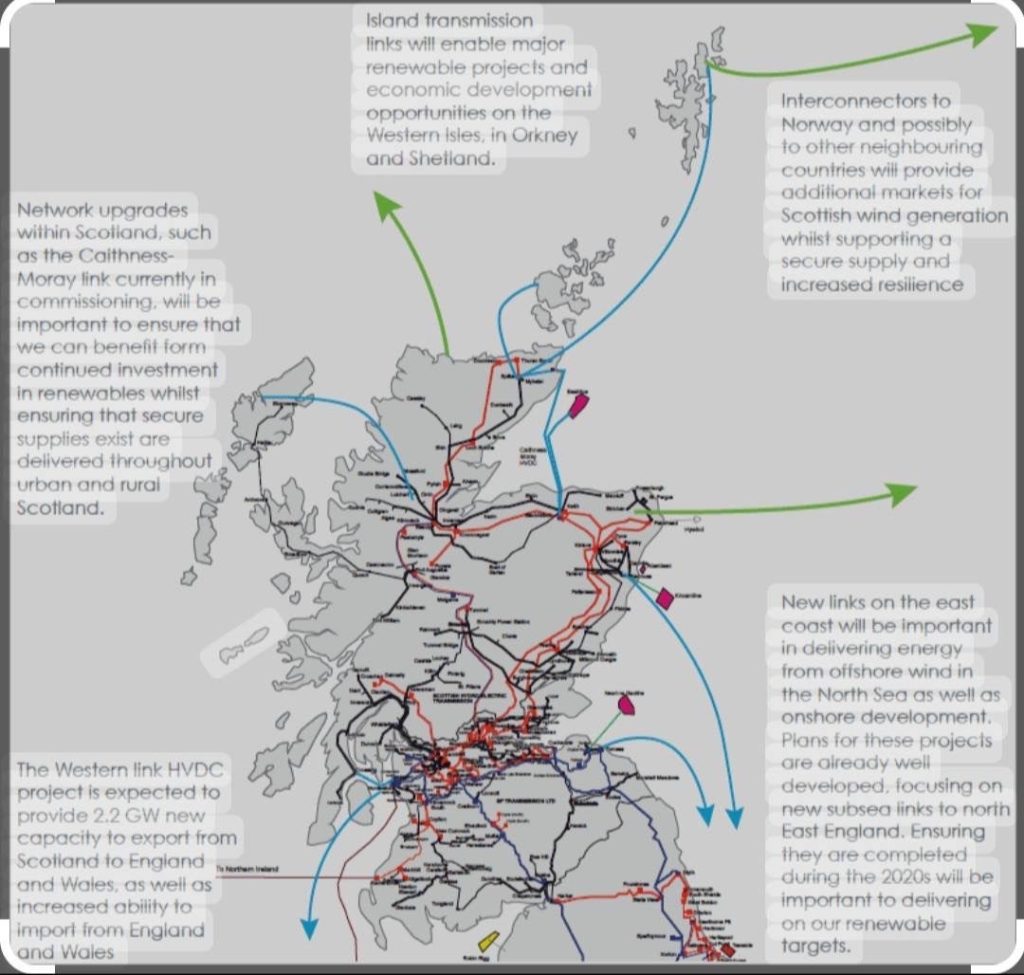
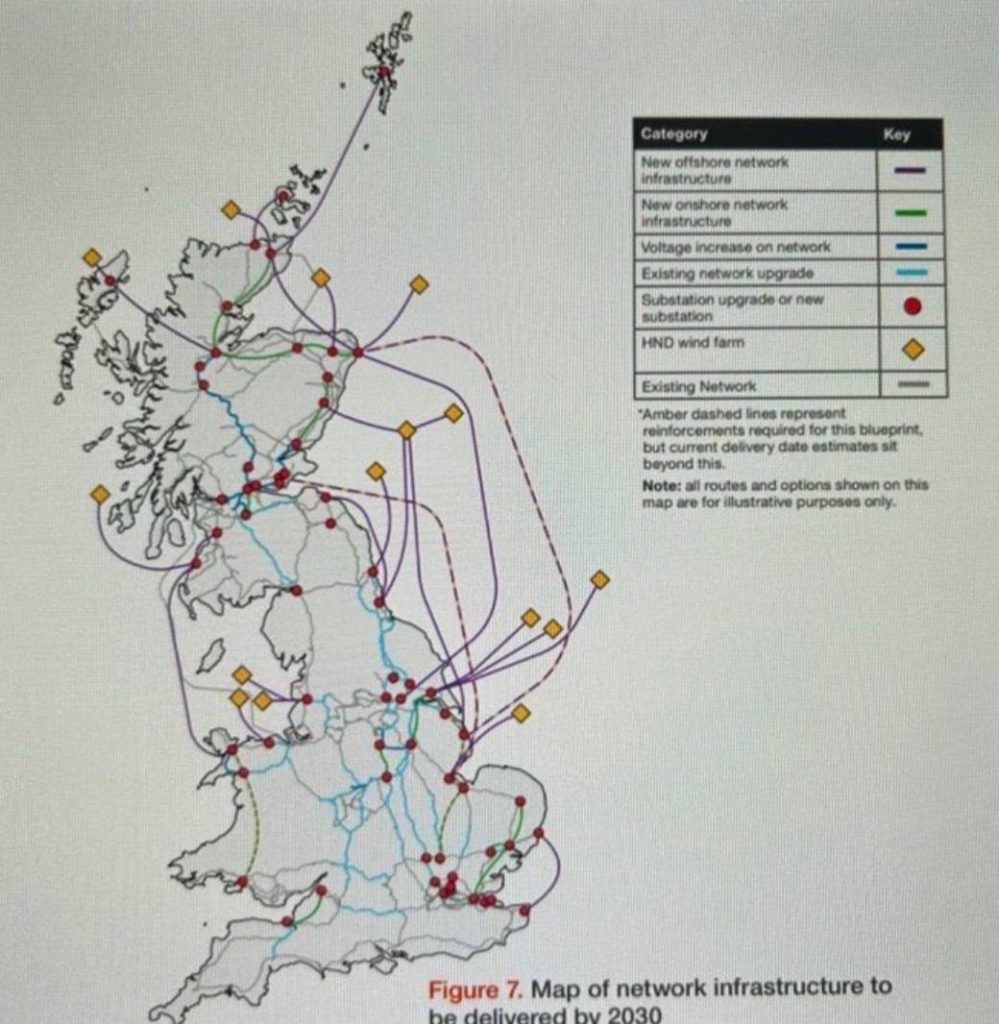
Scotland was the birthplace of the UK’s first electricity pylon in 1928, a landmark event in the development of the national grid.
A substantial £34 billion investment in Scotland’s electricity network is planned to expand and reinforce the network, which will be funded partly by an increase in electricity bills.
North-East Upgrade:
Plans are in place to build a new 66-mile line with steel pylons, some potentially up to 75m tall, to transport power from wind farms to Kintore and Tealing.
Skye to Fort Augustus:
A controversial revamp project includes new steel towers along parts of the route, replacing some existing wooden poles with new one
Spittal to Beauly Connection:
A 106-mile connection is planned to upgrade the overhead line between Spittal and Beauly, using steel pylons of approximately 57 meters in height.
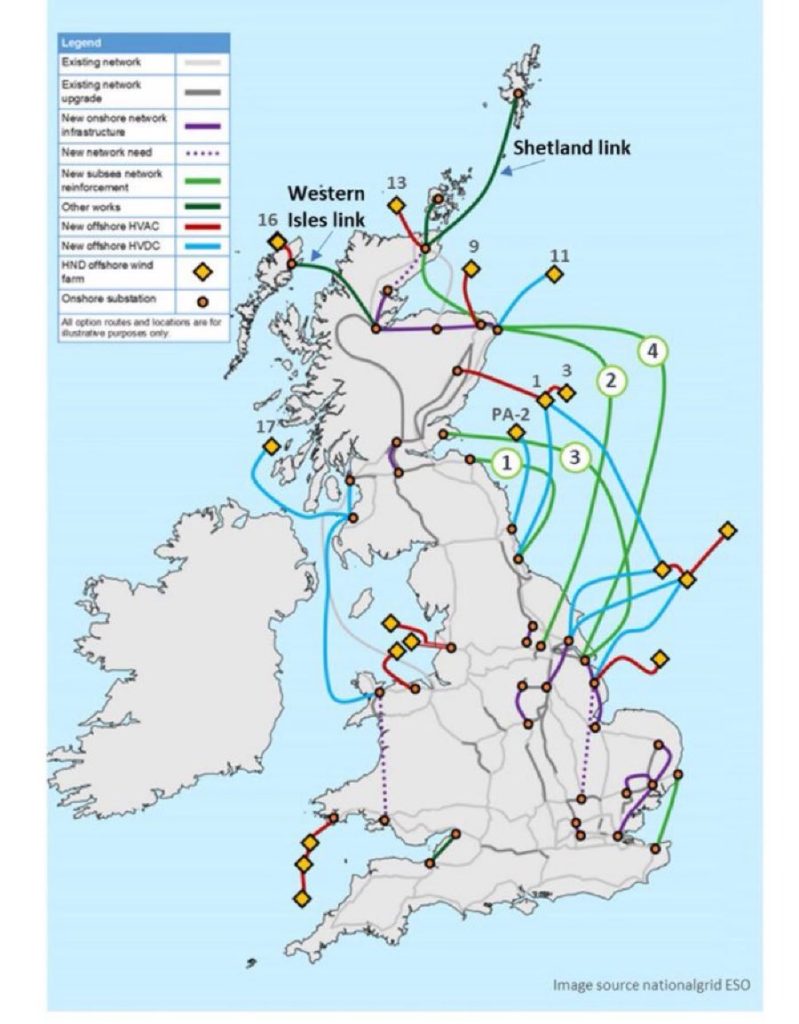
Concerns about pylons include their significant visual impact on rural landscapes, potential health effects from electromagnetic fields (EMFs), noise pollution, and negative impacts on wildlife through collision risk and habitat disruption. While some arguments suggest underground cables are a viable alternative, they also present their own significant environmental challenges, such as extensive land disturbance and the clearing of vegetation
Visual Impact & Aesthetics
Alternatives & Solutions